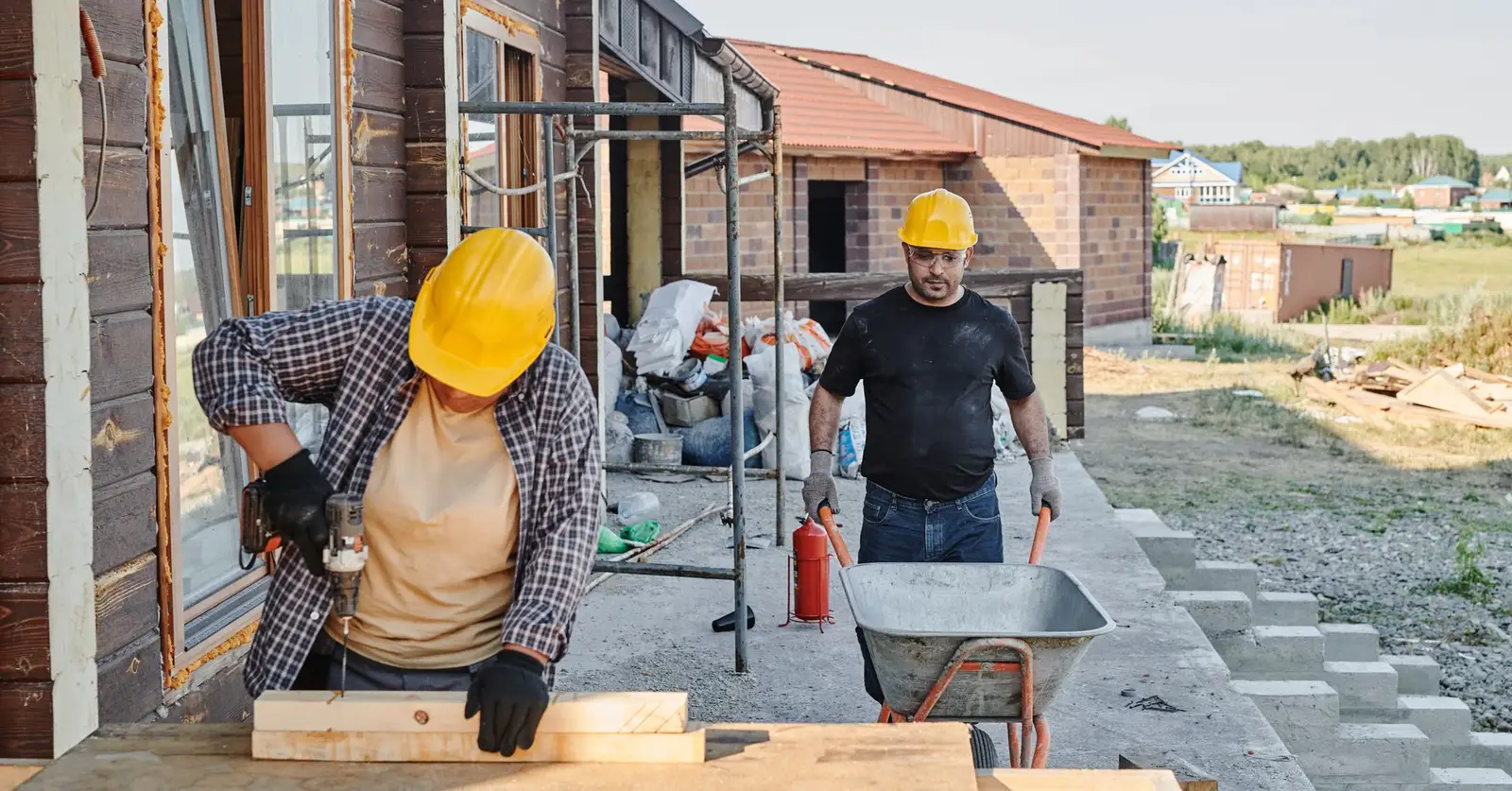


If you’re thinking about renovation work for 2027, book your site visit in January. Not because there’s anything magic about the date, but because every year the same pattern plays out: homeowners wait until spring to start asking around, every trade’s diary fills up at once, and the jobs that could have started in April end up starting in July. Get your survey done early and you’re first in the queue, not last.
Why January, specifically
We see it every single year across Bray, Greystones and the wider Wicklow and south Dublin area. Christmas is a natural pause point. People sit in a cold kitchen or a draughty box room over the holidays and think, right, this is the year we sort it. Then nothing happens until March, because that’s when everyone else has the same thought. By the time you’re calling around for quotes in April, you’re competing with every other homeowner in the county for the same handful of good tradespeople.
Booking a survey in January means you get an honest site visit before the busy season hits. You get accurate measurements, a proper look at what’s involved, and a realistic timeline, instead of a rushed estimate squeezed in between two other jobs. It also gives you breathing room if the job needs planning permission or a grant application, both of which take longer than people expect.
What a January survey actually involves
A good site visit isn’t just someone walking around with a tape measure for ten minutes. For renovation or improvement work, we’re looking at the condition of the existing structure, access for materials and skips, where services run, and anything that’s going to complicate the job once work starts. Older housing stock around Dun Laoghaire, Dundrum and Rathfarnham often hides surprises behind plaster and floorboards that a newer Blessington or Kilcoole estate house simply won’t have. A proper survey catches most of that before it becomes a mid-job surprise and a mid-job cost.
We’d always rather spend an extra half hour on site in January than discover something awkward in March when the walls are already open. That’s not us being cautious for the sake of it, it’s just what twenty years of doing this teaches you.
The Dublin and Wicklow weather factor
Our climate doesn’t do anyone any favours. Wet autumns and unpredictable springs mean external work, roofing, drainage, driveways, anything weather-dependent, has a narrow window to actually get done without delays. If you want external or structural work finished before next winter, the planning has to start now, not when the first dry week of the year tempts everyone else into action at the same time.
Internal renovations are less weather-sensitive, but they still benefit from early planning. Kitchens and bathrooms in particular often need materials ordered well in advance, and supply lead times have a habit of running longer than people expect, especially on anything custom or imported.
Planning permission and grants: don’t leave it late
If your renovation involves an extension, a change of use, or anything that might touch on exempted development rules, you need to know where you stand before you start pricing materials. Planning permission timelines through your local authority can run to several months once an application is lodged, and that’s before you factor in any requests for further information. Start that process in January and you’re still on track for a mid-year build. Start it in May and you’re likely looking at next year.
The same goes for grant-funded work such as SEAI-backed energy upgrades. Eligibility criteria, application steps and funding availability change from time to time, so don’t take anyone’s word for what applies this year, including ours. Check the current position directly with SEAI or your local authority before you commit to a scope of works based on assumed grant support.
What pushes a renovation quote up or down
We can’t give prices here, every job is different and we wouldn’t stand over a figure we hadn’t actually assessed on site. But there are consistent factors that move a quote in one direction or the other, and it’s worth knowing them before your survey:
- Access: a tight site in Dun Laoghaire or Dublin city with no room for a skip or scaffolding costs more to work on than an open site in Rathdrum or Arklow.
- Existing condition: older properties often need remedial work uncovered only once the job starts, which is exactly why a thorough survey matters.
- Specification: standard fittings and finishes versus bespoke or imported materials make a real difference to both cost and lead time.
- Timing: booking early, outside peak season, generally means more competitive availability than trying to squeeze a job into a packed spring schedule.
- Scope clarity: a well-defined brief from the start avoids the back-and-forth pricing that happens when the job grows mid-way through.
Our honest take
If you’re on the fence about whether to bother booking a survey this early, here’s our honest view: it costs you nothing but a phone call or a message, and it puts you months ahead of where you’d otherwise be. The homeowners who get the best outcomes, the smoothest jobs, the fewest surprises, are almost always the ones who started the conversation before they needed to, not after.
We’ve been doing renovation and improvement work across Dublin and Wicklow long enough to know the pattern repeats every single year. January quiet period, spring rush, summer bottleneck. Step outside that cycle and you’ll thank yourself in June.
If you’ve a renovation in mind for 2027, get in touch through our get a quote page and we’ll arrange a site visit before the spring rush begins. You can also see the range of work we cover on our services page, or find out more about us on our about us page.
Frequently Asked Questions
How far in advance should I book a renovation survey in Dublin or Wicklow?
Ideally two to three months before you want work to start, and earlier again if planning permission or a grant application is involved. January is a good starting point for anything you want underway by spring or summer.
Does a site survey cost anything?
This varies by the scope of the job and what’s involved in assessing it properly. The best way to find out is to contact us directly through our contact page and describe the job, and we’ll explain what the visit involves.
Do I need planning permission for a home renovation?
It depends on the nature and scale of the work. Some renovations fall under exempted development, others don’t. Rules and thresholds can change, so always confirm the current position with your local authority before finalising your plans.
Are SEAI grants available for renovation work?
Grant schemes and eligibility do exist for certain energy upgrade works, but criteria and funding levels are set by SEAI and can change. Check directly with SEAI for the current scheme details before budgeting around a grant amount.
What areas do you cover for site visits?
We cover Dublin and Wicklow, including Bray, Greystones, Arklow, Rathdrum, Blessington, Enniskerry, Kilcoole, Delgany, Dublin city, Dun Laoghaire, Dundrum, Stillorgan, Sandyford, Tallaght and Rathfarnham.
What’s the biggest mistake homeowners make when planning a renovation?
Leaving the first site visit too late. Once spring arrives, good tradespeople’s diaries fill up fast, and homeowners who start the process in January simply get more choice, more accurate planning time, and a better shot at hitting their preferred timeline.